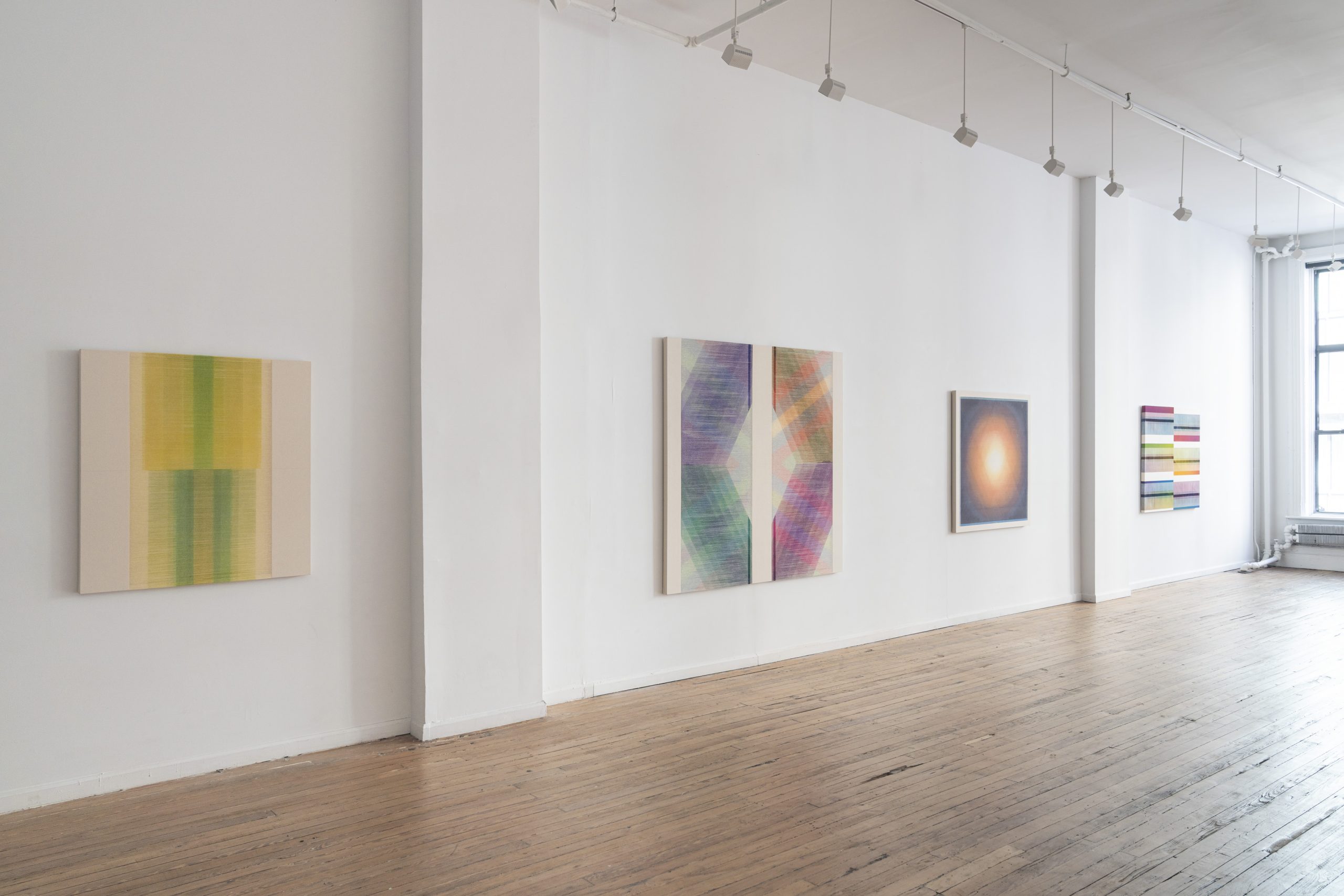
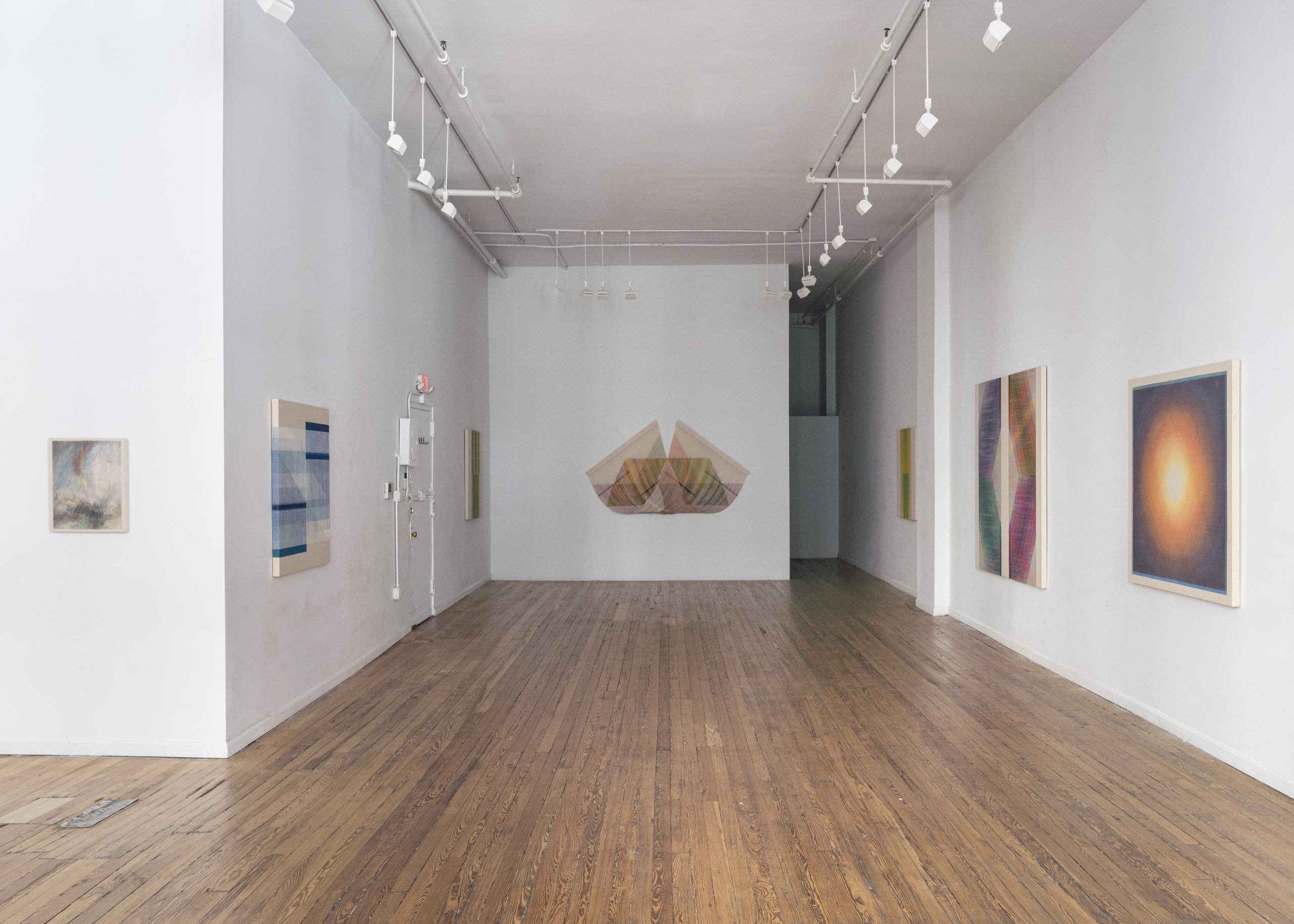
JDJ is pleased to present Myles Bennett: Unsubstantial Territories, a solo exhibition of new paintings that marks a significant evolution in the artist’s ongoing investigation of canvas, color, geometry, and perception.
On view September 30 through October 24, the exhibition brings together a group of works in which Bennett moves beyond an emphasis on material structure toward increasingly atmospheric and perceptual spaces.
Myles Bennett, Unsubstantial Territories, Installation view, JDJ, New York, 2026
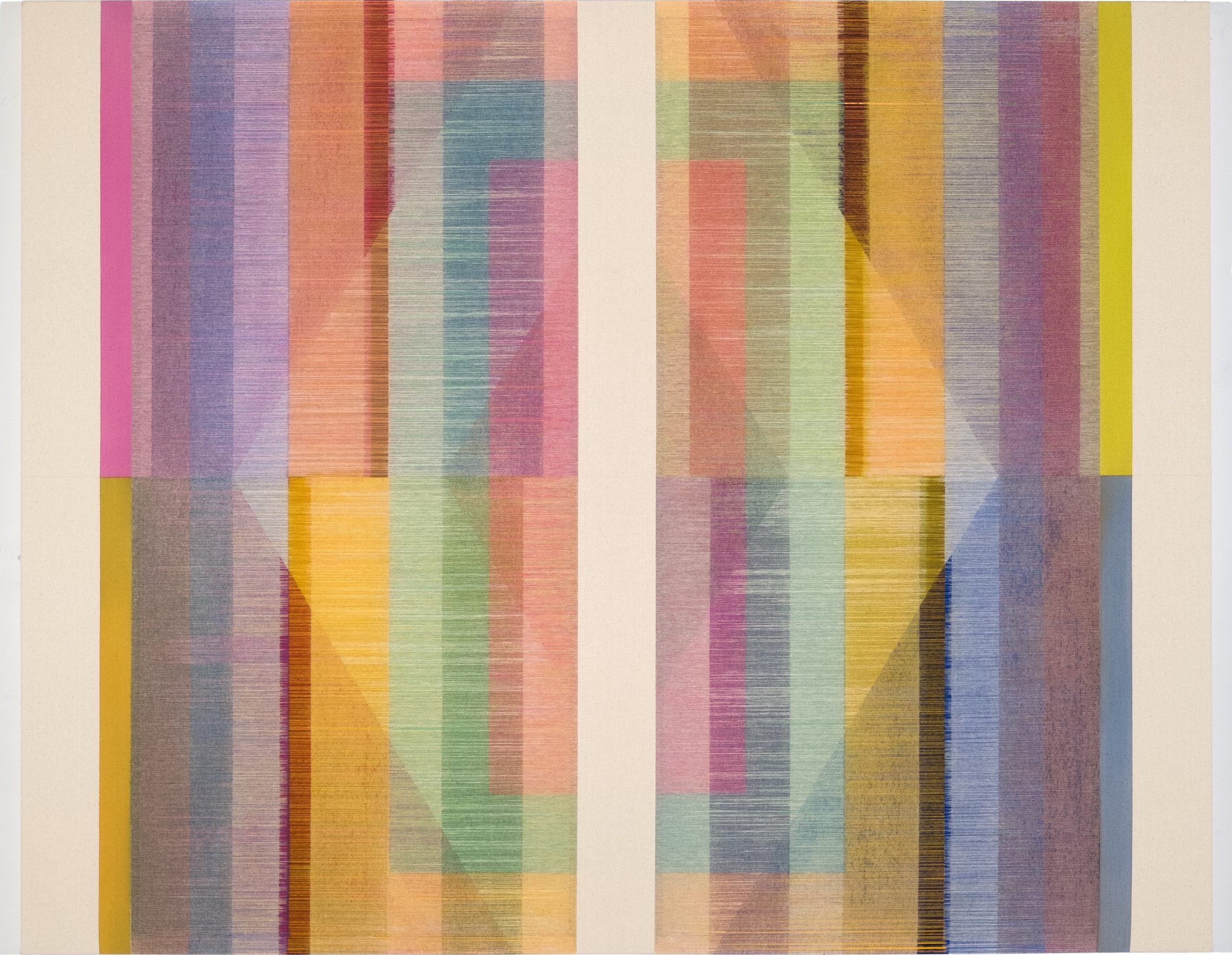
Myles Bennett
Interference Waves 2, 2026
Ink, Acrylic, and Colored Pencil on Canvas
48 x 60 in (121.9 x 152.4 cm) in
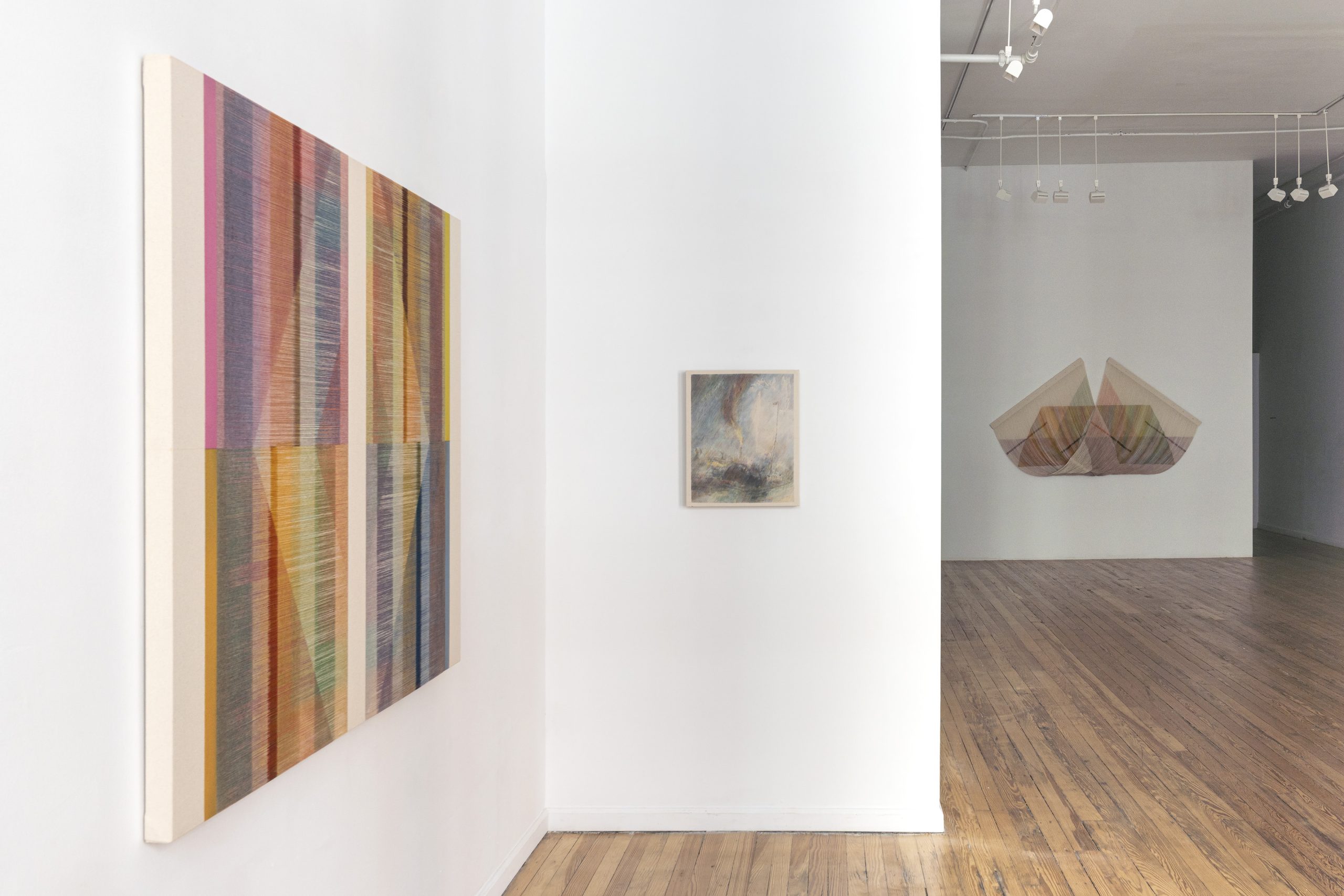
Myles Bennett, Unsubstantial Territories, Installation view, JDJ, New York, 2026
Using the grain of raw canvas as both guide and generative system, Bennett works across ink, acrylic, graphite, and colored pencil. His interventions blur the divisions between painting, drawing, textile, and sculpture, allowing the space behind the picture plane to become an active component of the work.
In earlier paintings, Bennett’s precise manipulation of the canvas—removing parallel threads with a small blade, applying ink to both the recto and verso, and allowing color to register through the weave—created complex relationships between surface, transparency, opacity, and structure.
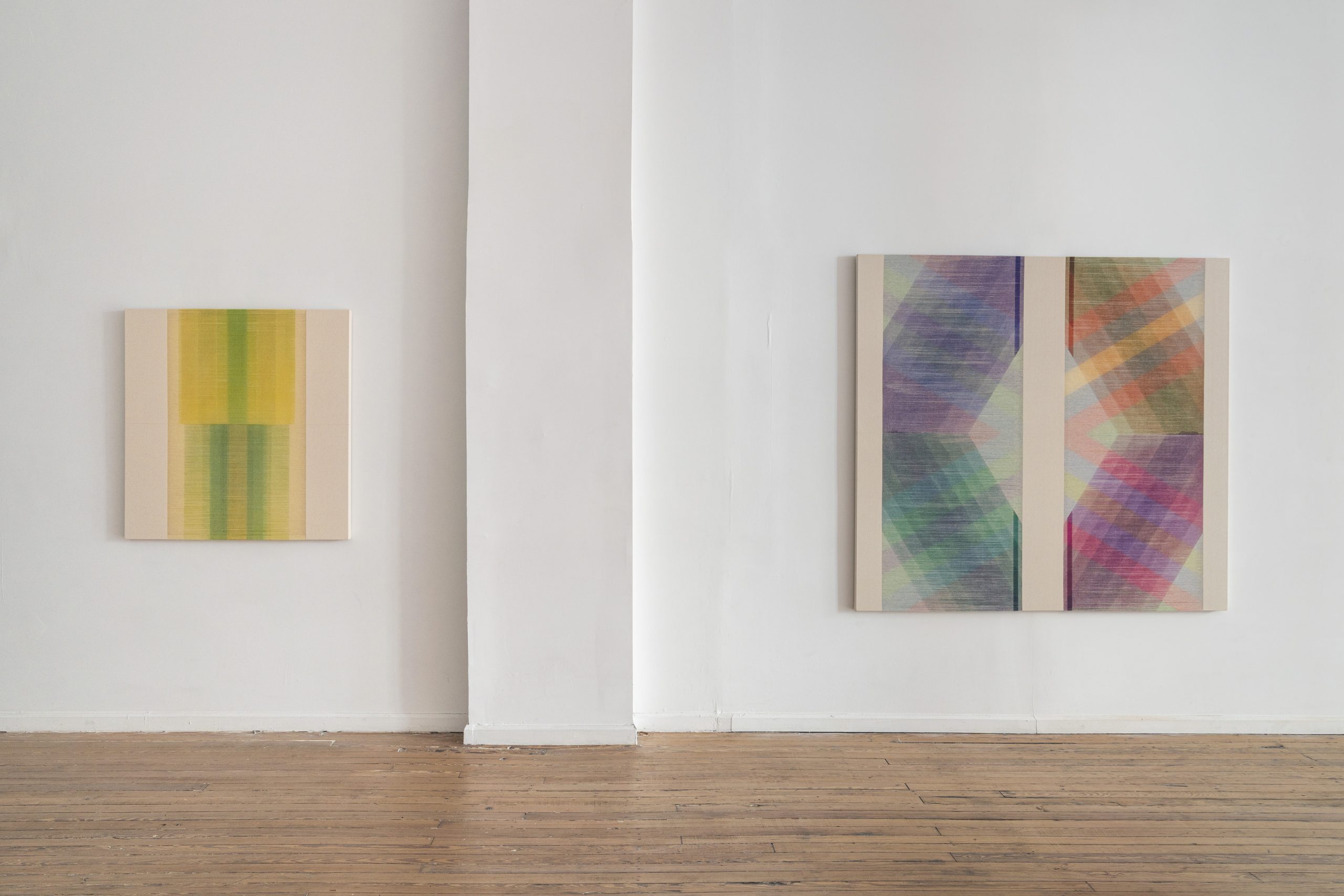
Myles Bennett, Unsubstantial Territories, Installation view, JDJ, New York, 2026
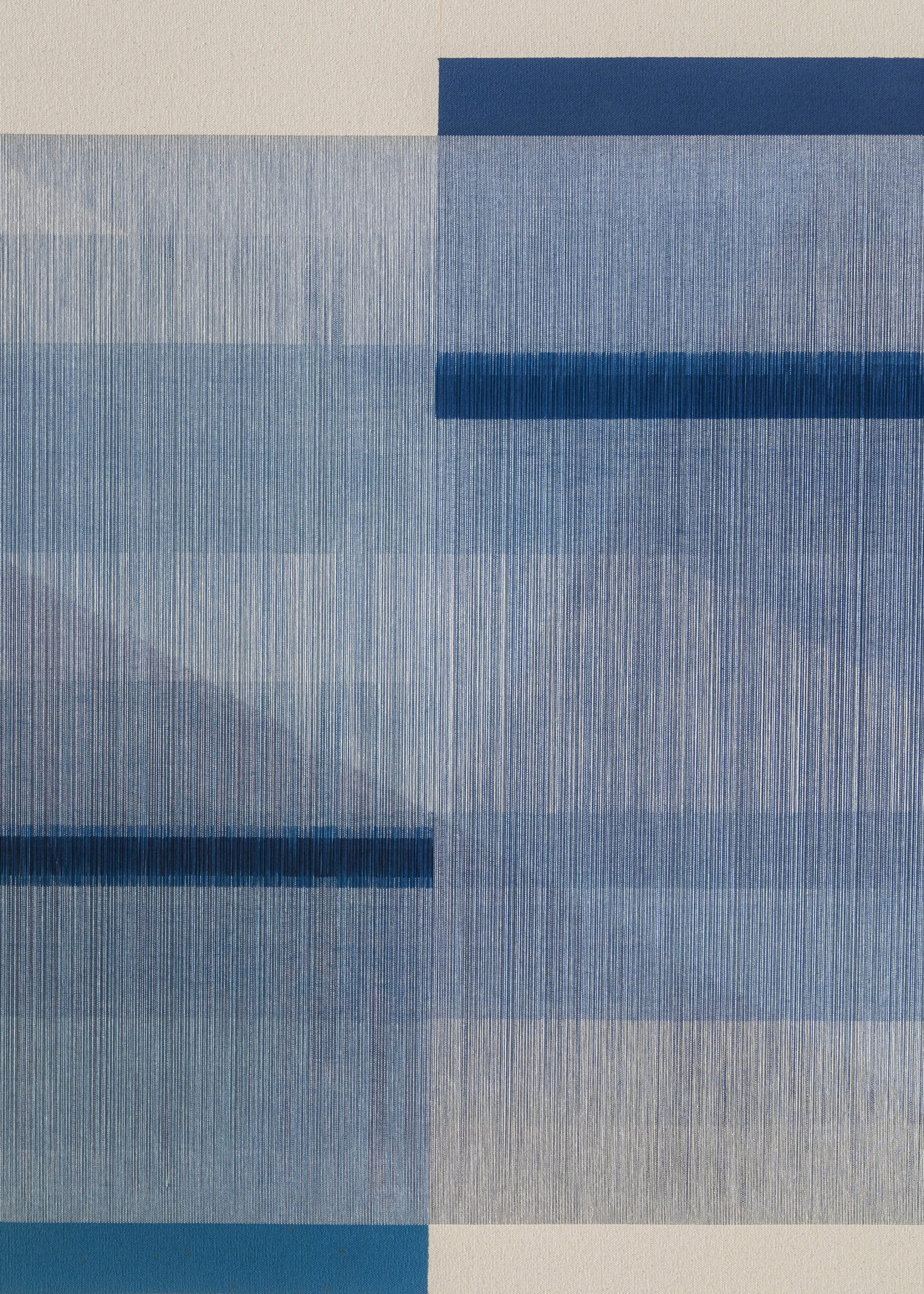
Myles Bennett, Unsubstantial Territories, Installation view, JDJ, New York, 2026
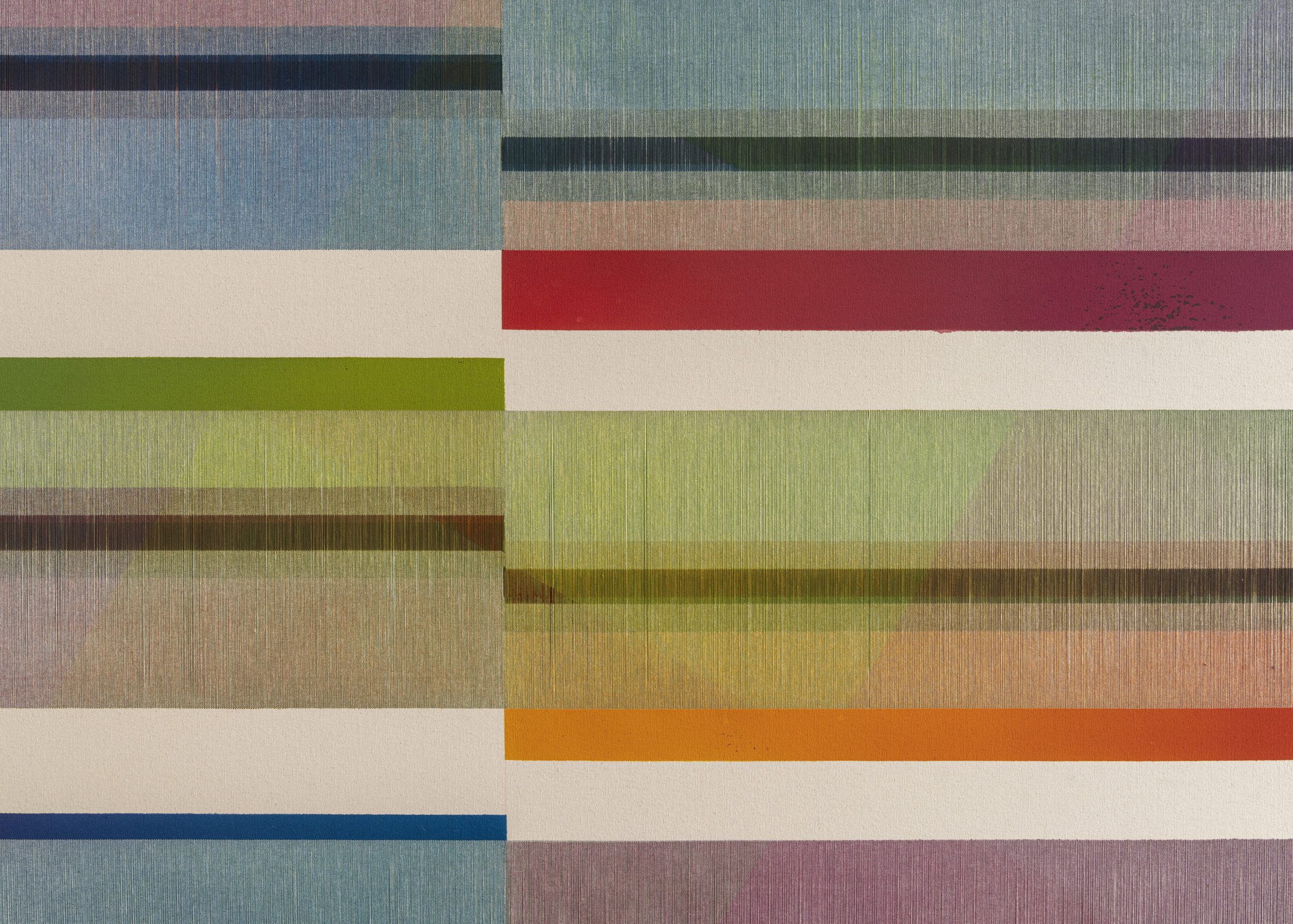
Myles Bennett, Unsubstantial Territories, Installation view, JDJ, New York, 2026
In Unsubstantial Territories, these systems remain fundamental, but they have become quieter and more autonomous. Bennett describes an ongoing process of editing: as more is removed, particularly in terms of color and geometric information, the painterliness of the works becomes increasingly pronounced.
What initially appears to be a highly controlled system gradually reveals something more vulnerable and intuitive—the raw canvas itself, its irregularities, translucency, and susceptibility to light.
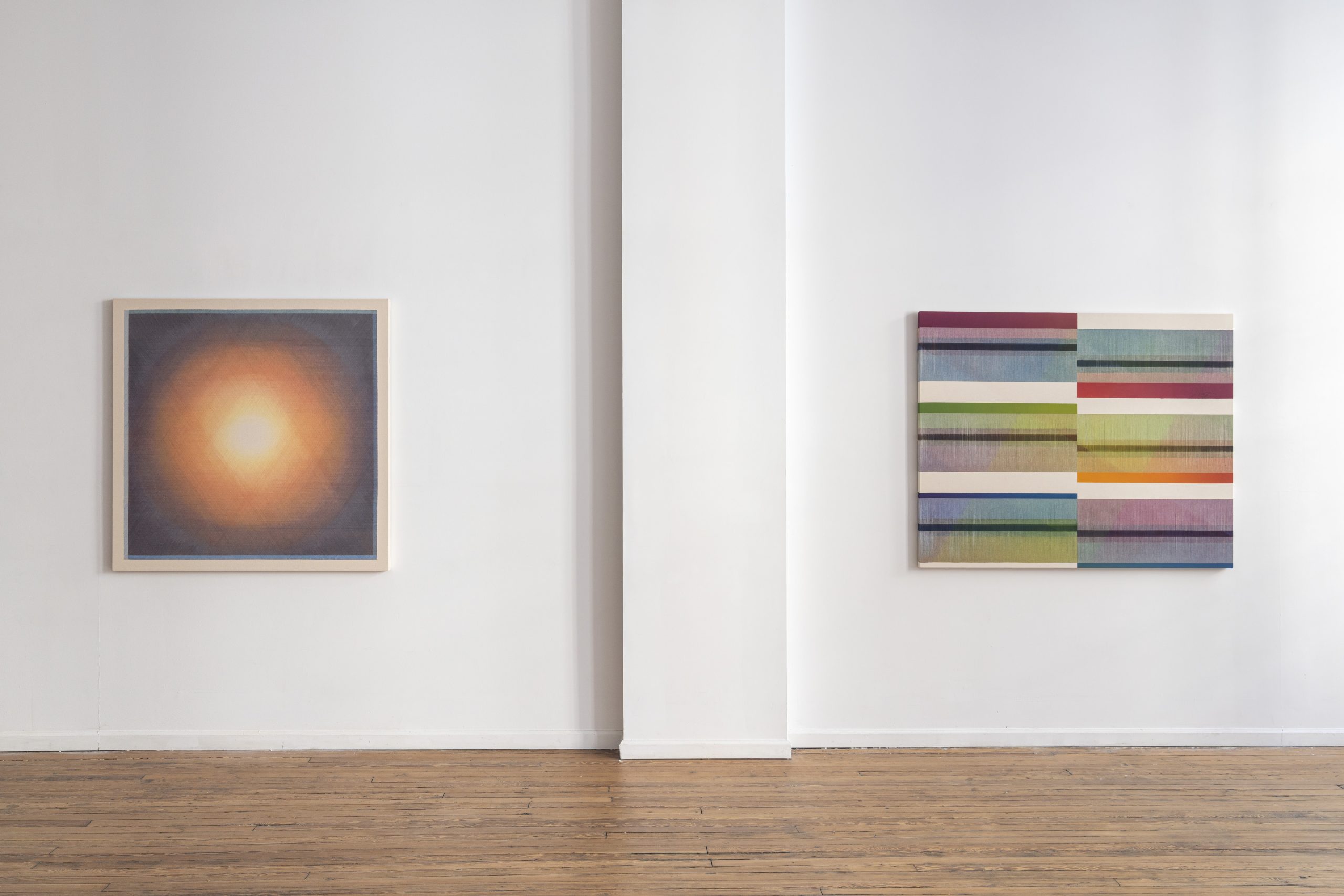
Myles Bennett, Unsubstantial Territories, Installation view, JDJ, New York, 2026
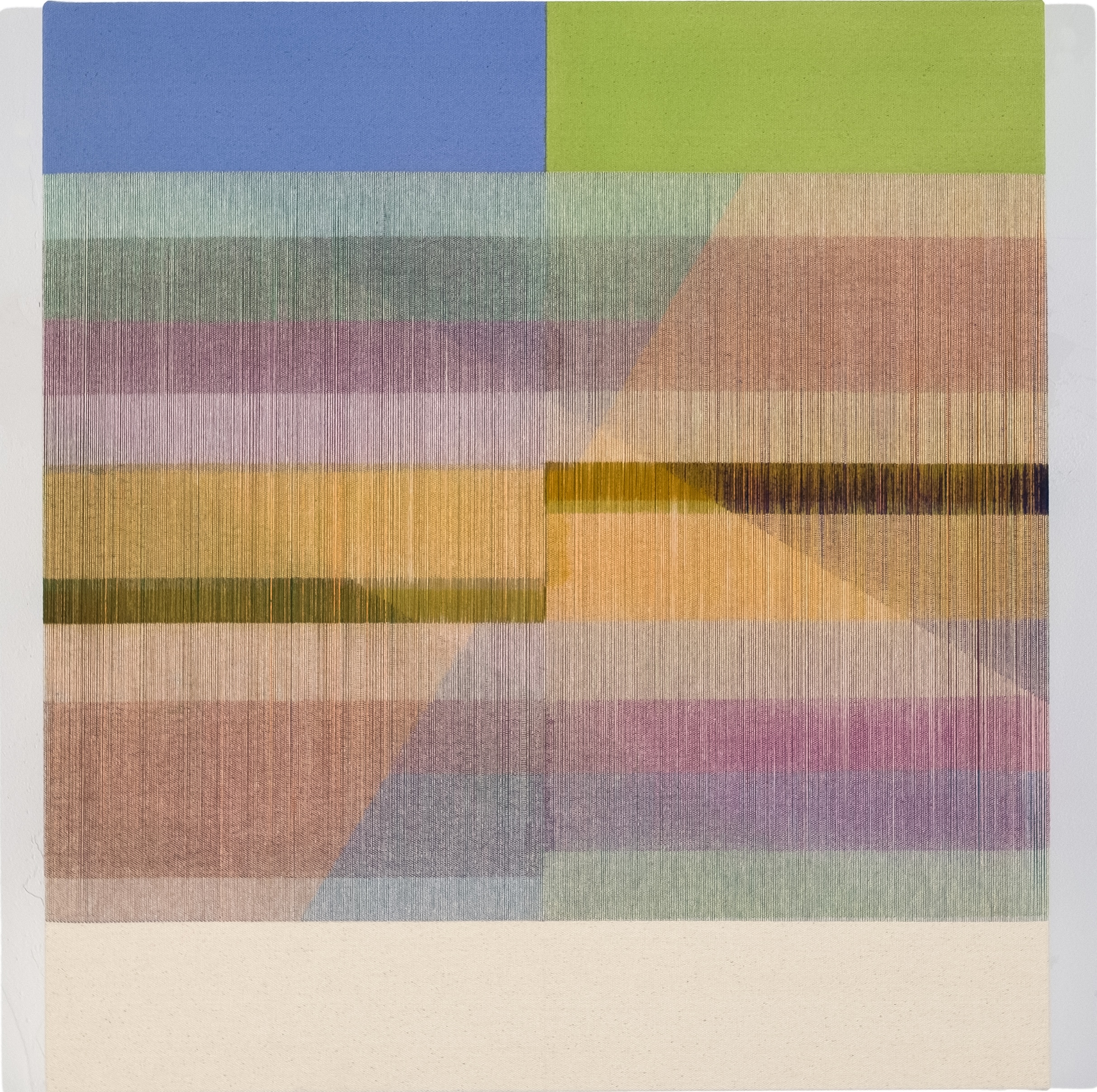
Myles Bennett
Tangent Waves 28, 2026
Ink, Acrylic, and Colored Pencil on Canvas
25 x 23 in (63.5 x 58.4 cm)
The new paintings move between several related bodies of work, including Fugitive Registers, Tangent Waves, Resonate Waves, Cross Waves, and Prism Shards. Each series has developed its own visual identity, becoming, in Bennett’s words, “evolutionarily autonomous”—a distinct system capable of generating its own aesthetic language.
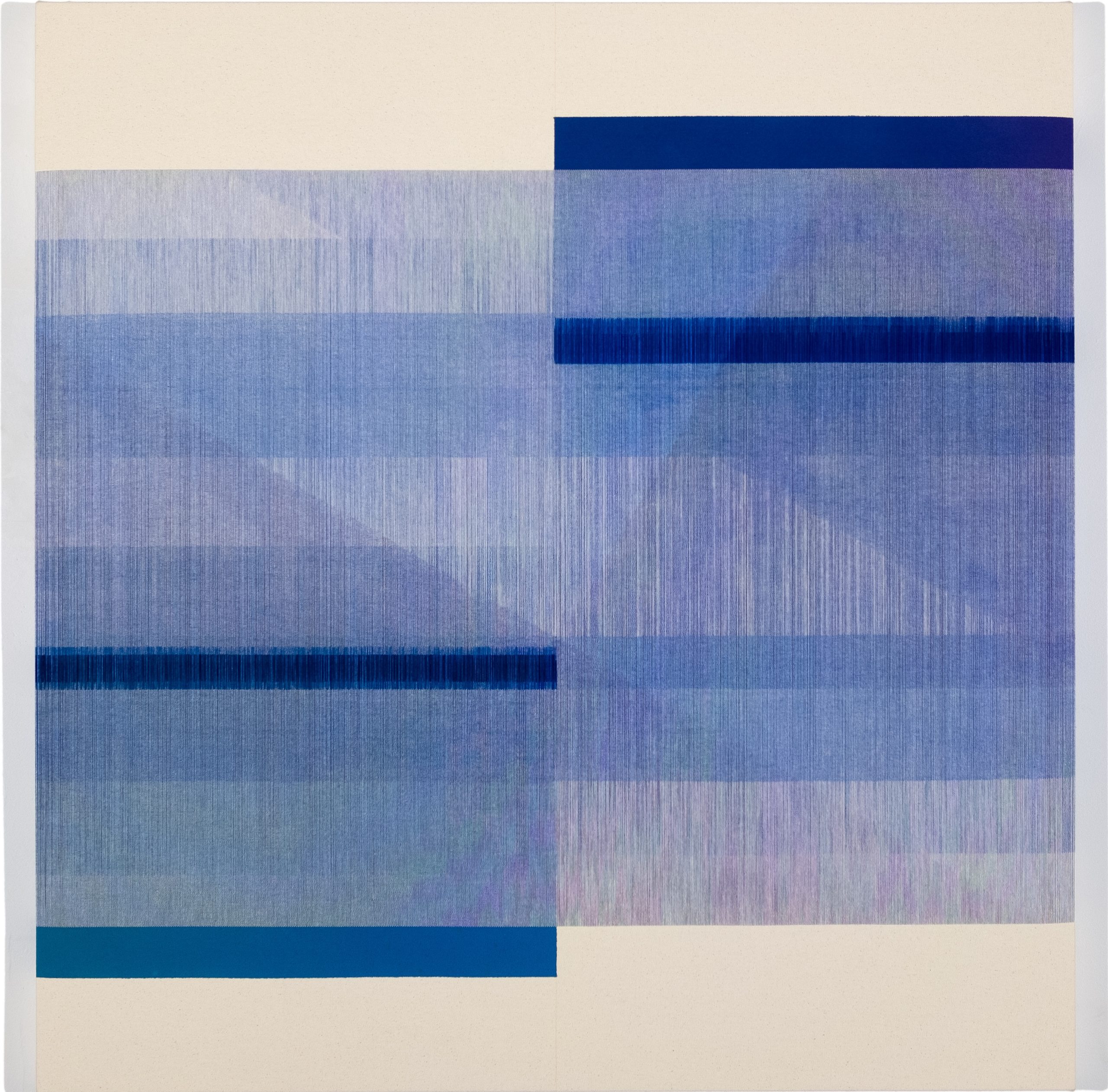
Myles Bennett
Tangent Waves in Blue, 2026
Ink, Acrylic, and Colored Pencil on Canvas
43 x 41 in (109.2 x 104.1 cm) in
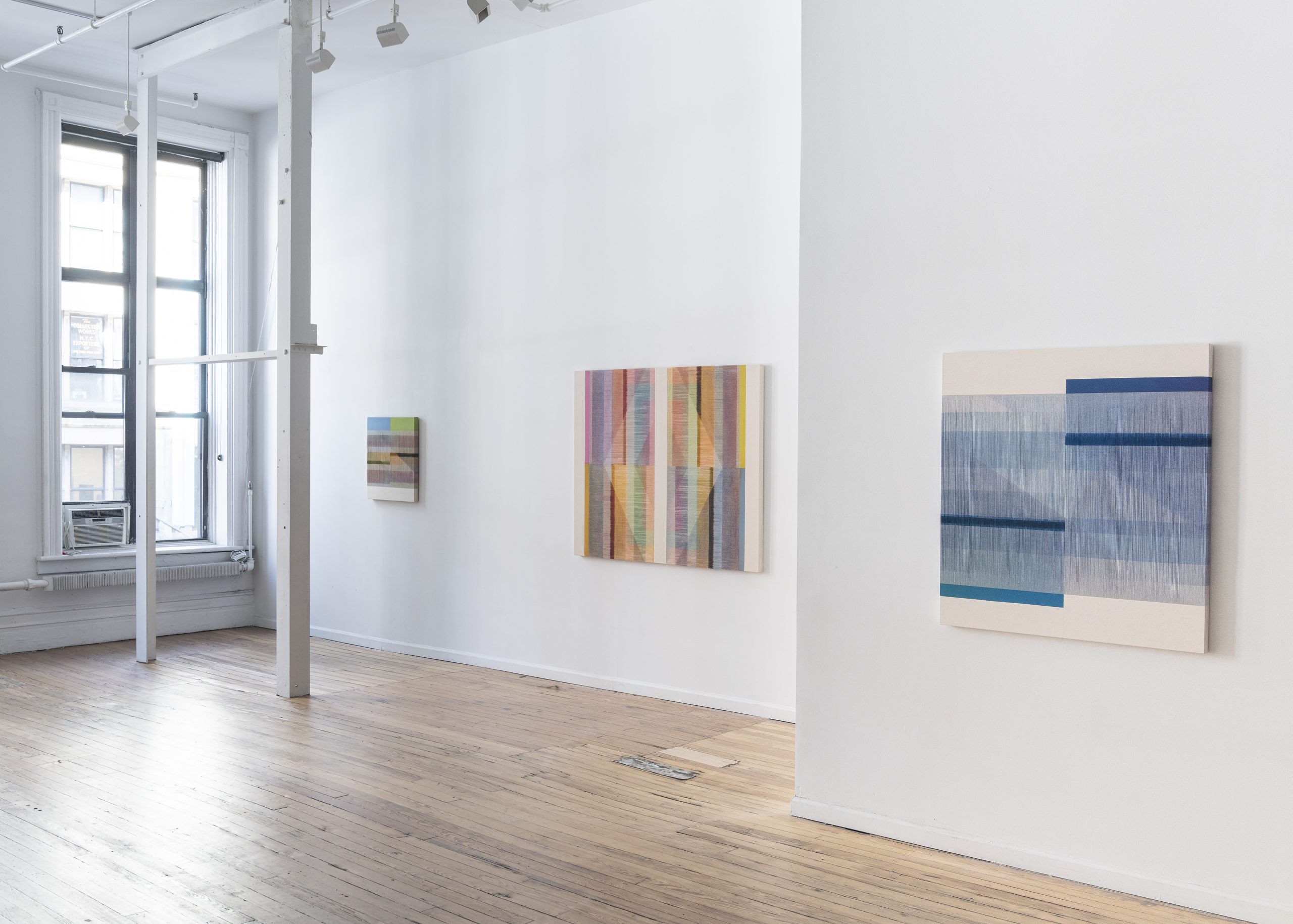
Myles Bennett, Unsubstantial Territories, Installation view, JDJ, New York, 2026
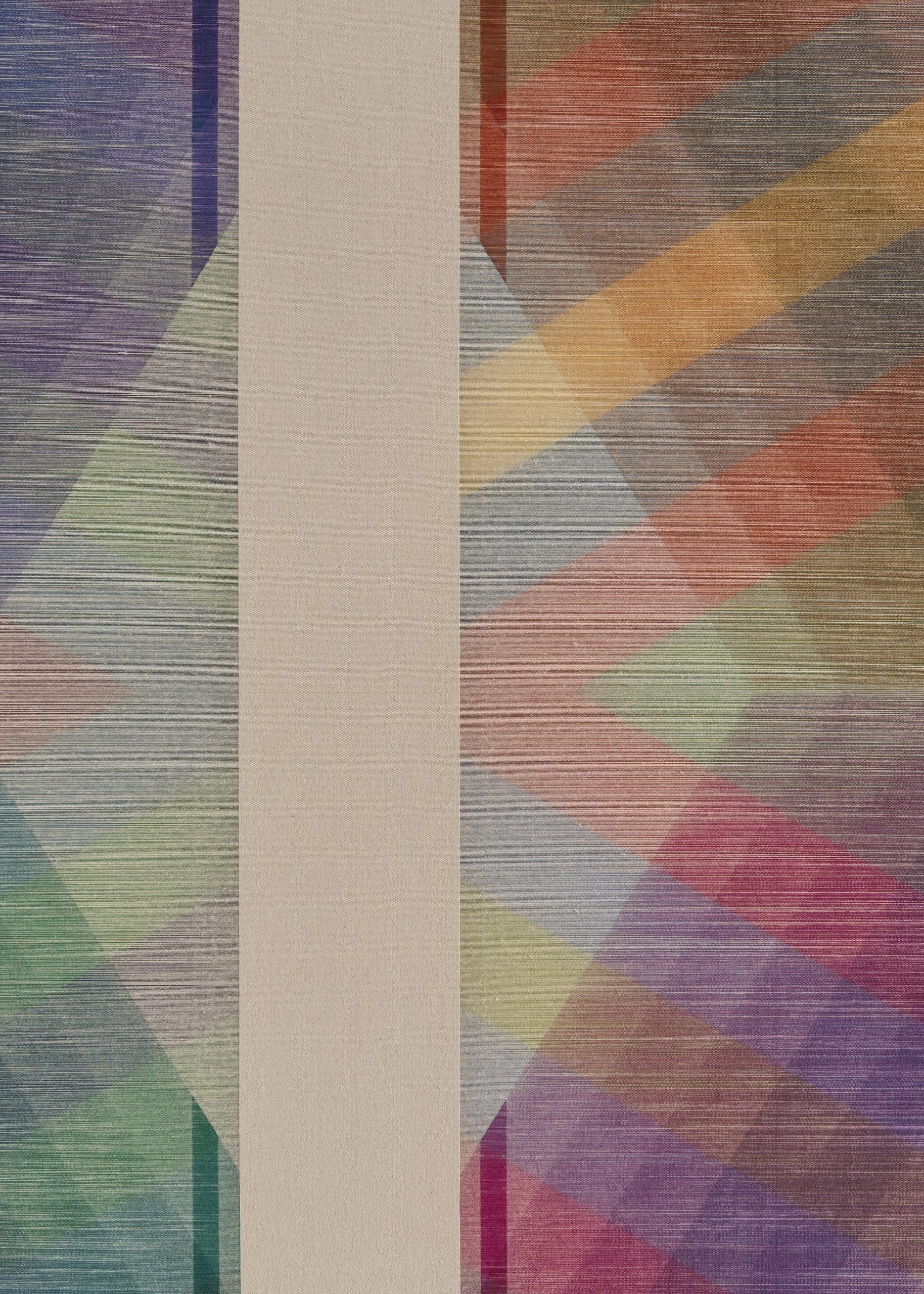
Myles Bennett, Unsubstantial Territories, Installation view, JDJ, New York, 2026
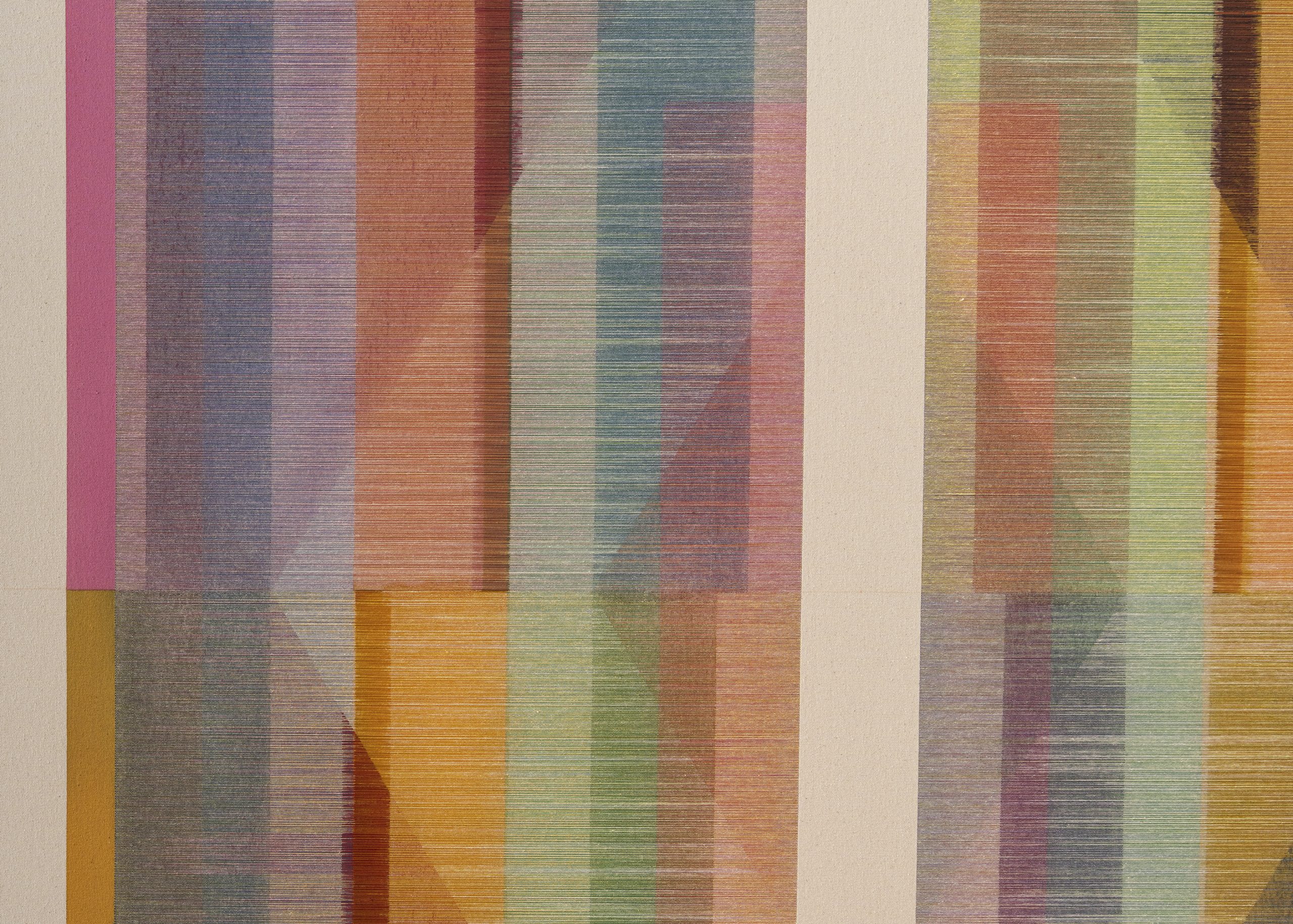
Myles Bennett, Unsubstantial Territories, Installation view, JDJ, New York, 2026
Yet across the exhibition, the emphasis has shifted from geometry toward atmosphere. Subtle shifts in tone and color produce spaces that feel less constructed than encountered: atmospheric worlds that seem to hover between landscape, abstraction, and optical phenomenon.
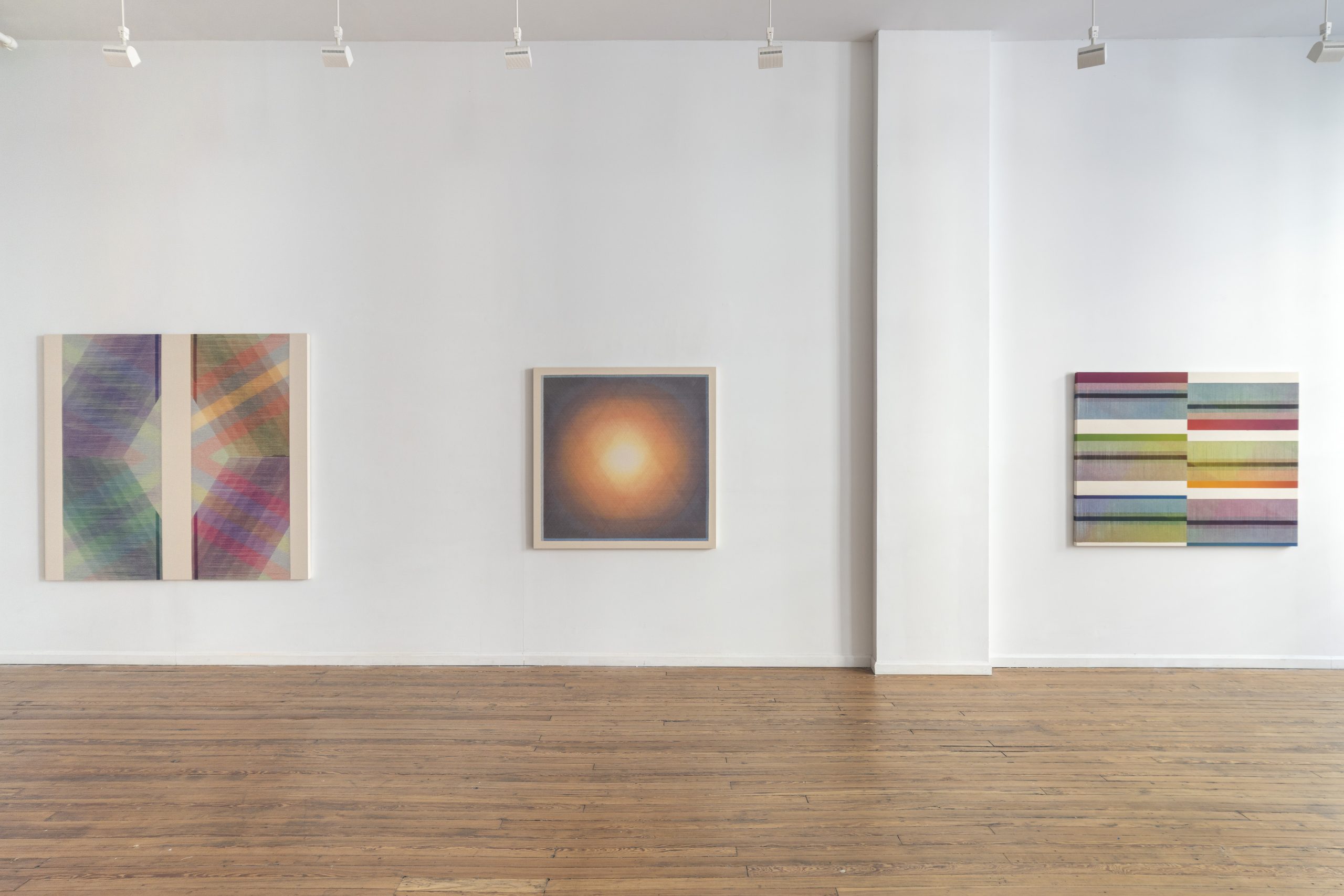
Myles Bennett, Unsubstantial Territories, Installation view, JDJ, New York, 2026
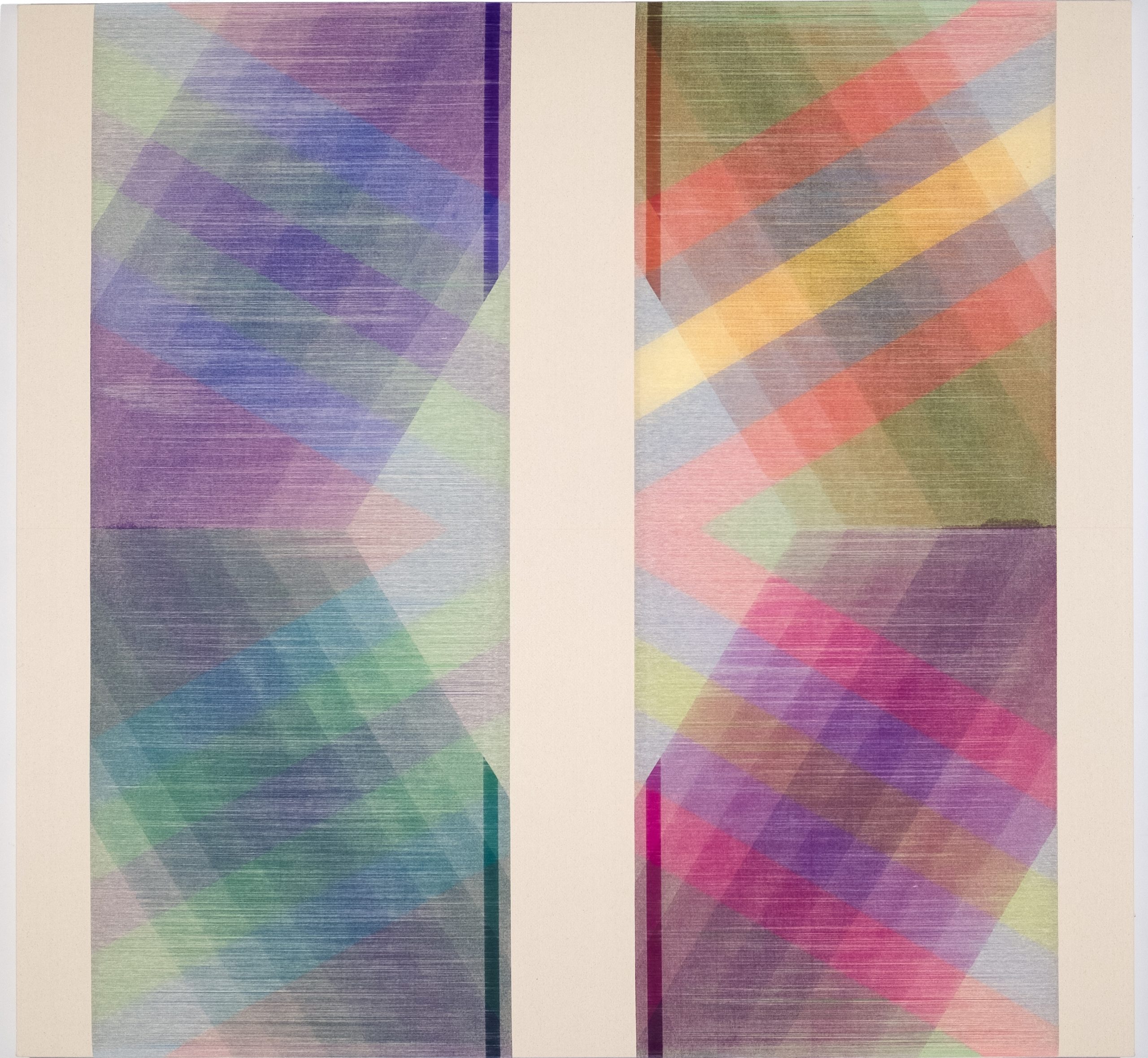
Myles Bennett
Cross Waves, 2026
Ink and Acrylic on Canvas
68 x 72 in (172.7 x 182.9 cm)
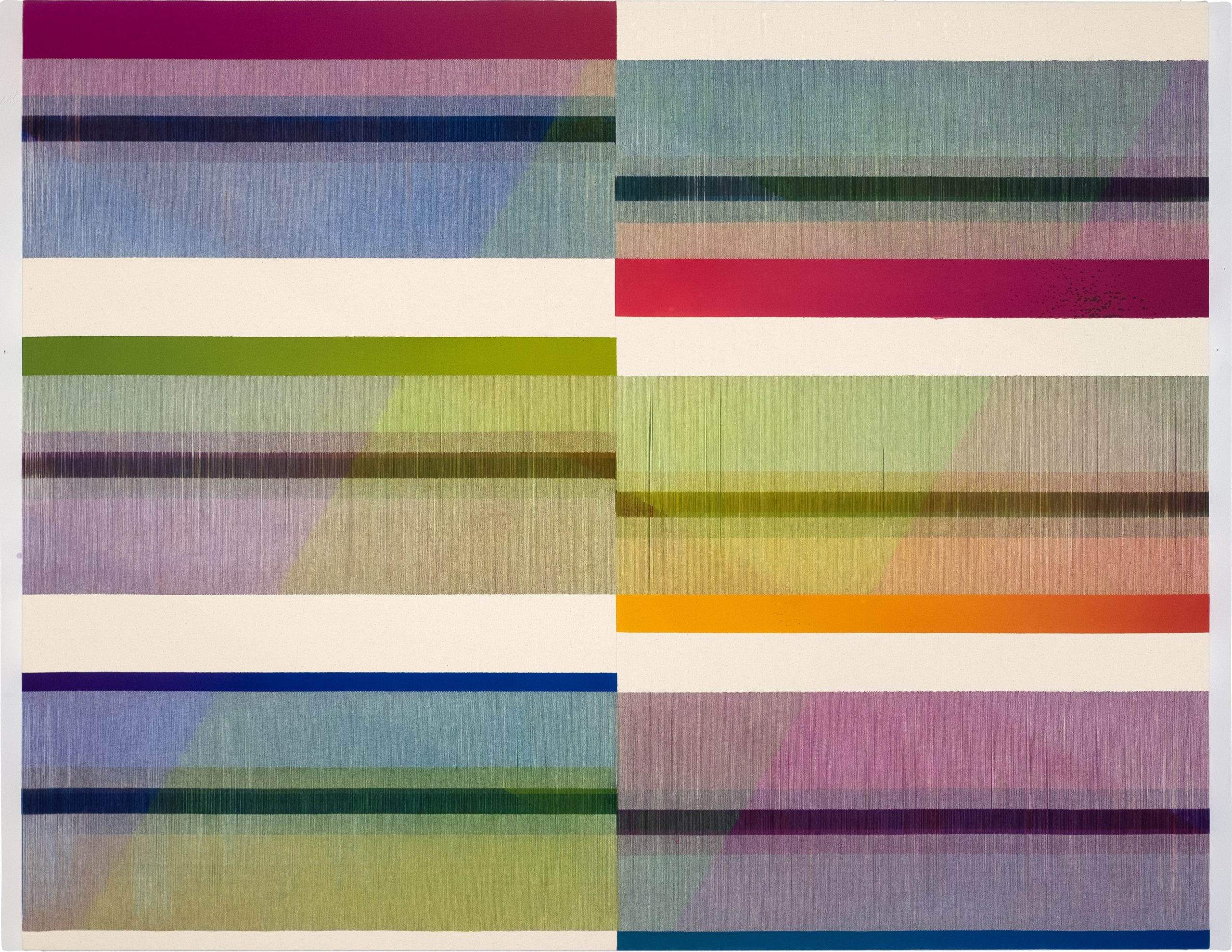
Myles Bennett
Prism Shard 15, 2026
Ink, Acrylic, and Colored Pencil on Canvas
48 x 60 in (121.9 x 152.4 cm) in
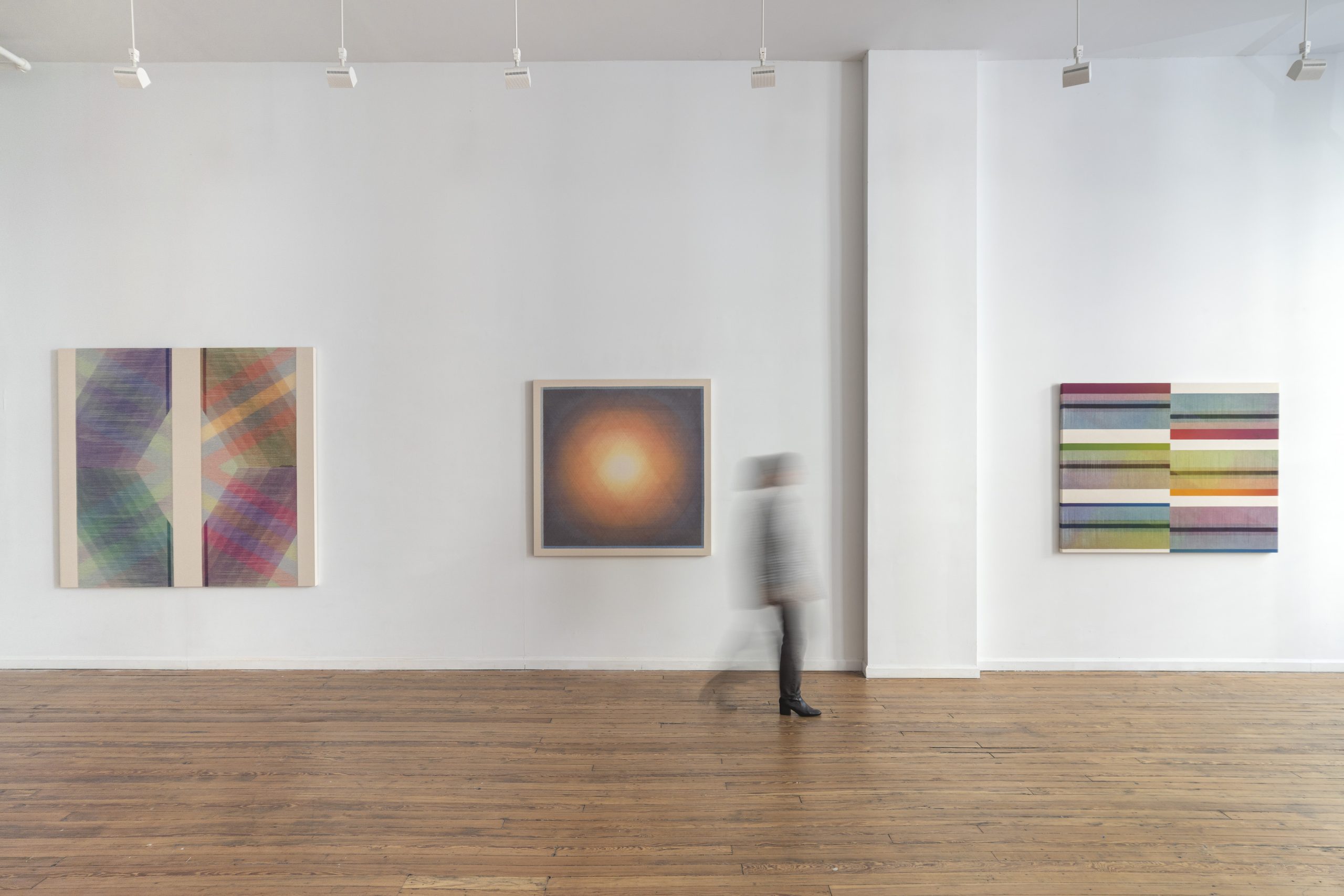
Color itself becomes a means of creating what Bennett calls “fugitive registers,” in which opposing colors meet to produce a perceptual frequency. The effect can be remarkably subtle. Rather than relying on sharply delineated forms, Bennett allows colors to bleed, overlap, and register through the canvas, creating paintings whose presence changes according to light, distance, and the viewer’s position.
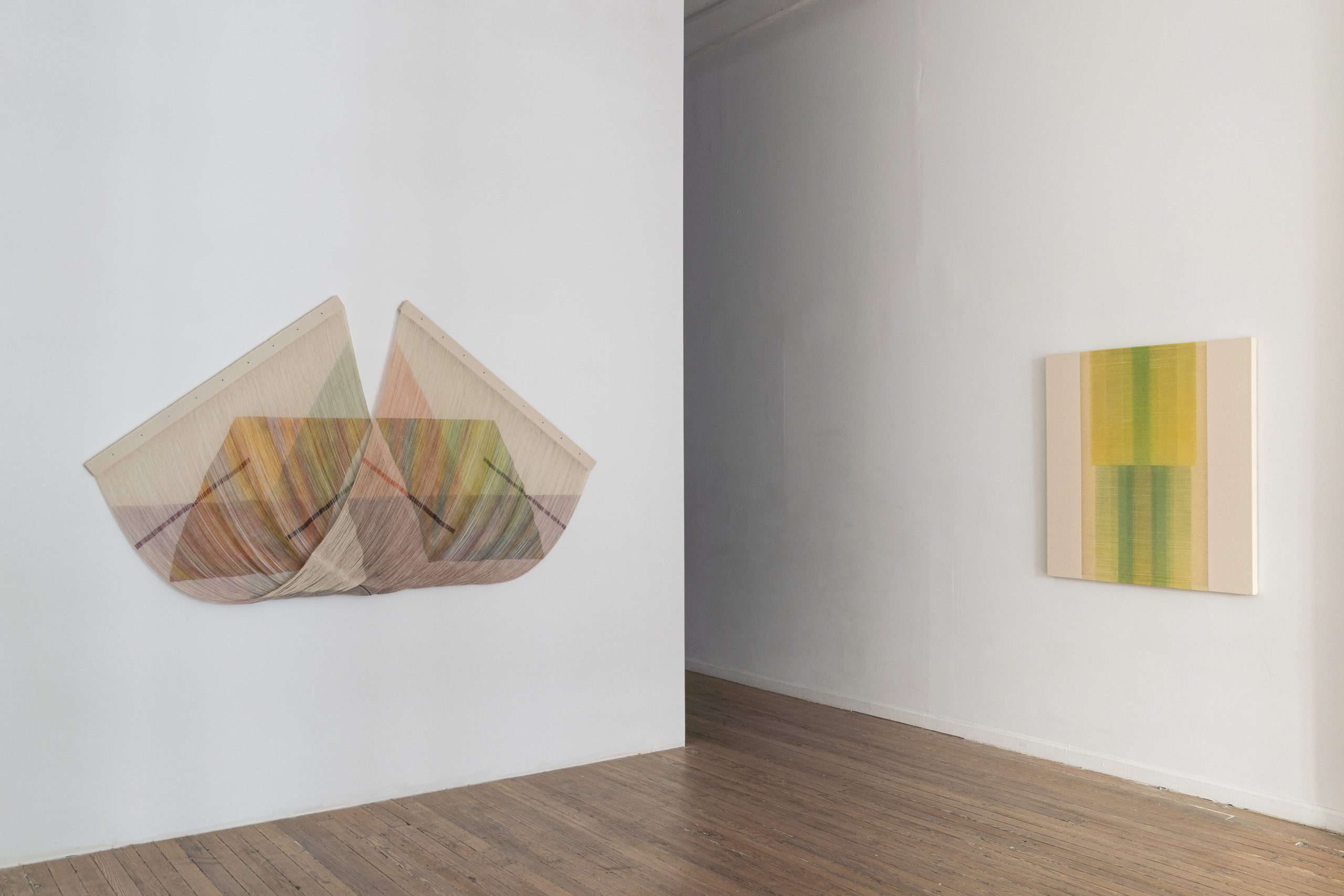
Myles Bennett, Unsubstantial Territories, Installation view, JDJ, New York, 2026
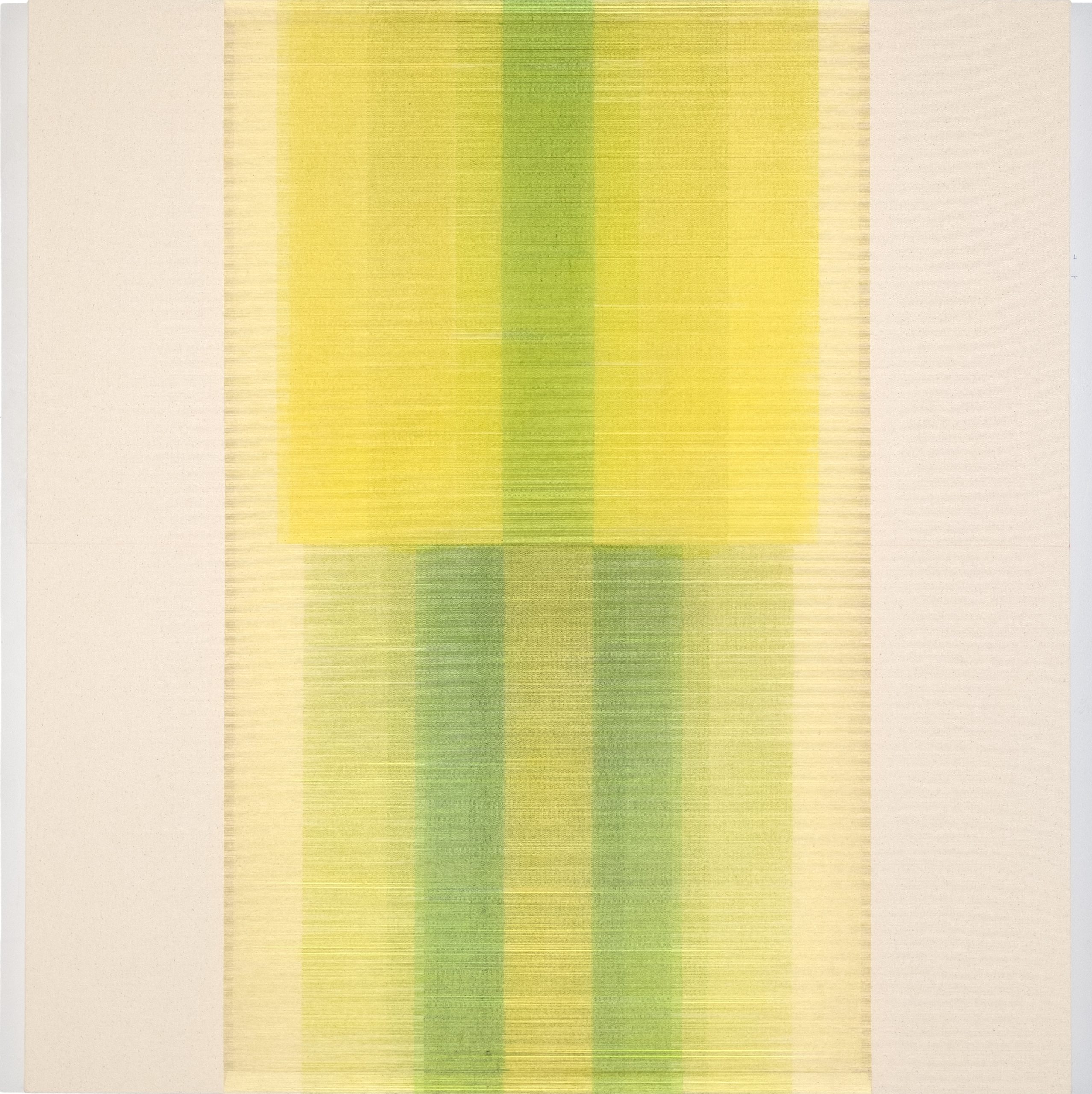
Myles Bennett
Fugitive Registers 3, 2026
Ink, Acrylic, and Colored Pencil on Canvas
43 x 41 in (109.2 x 104.1 cm) in
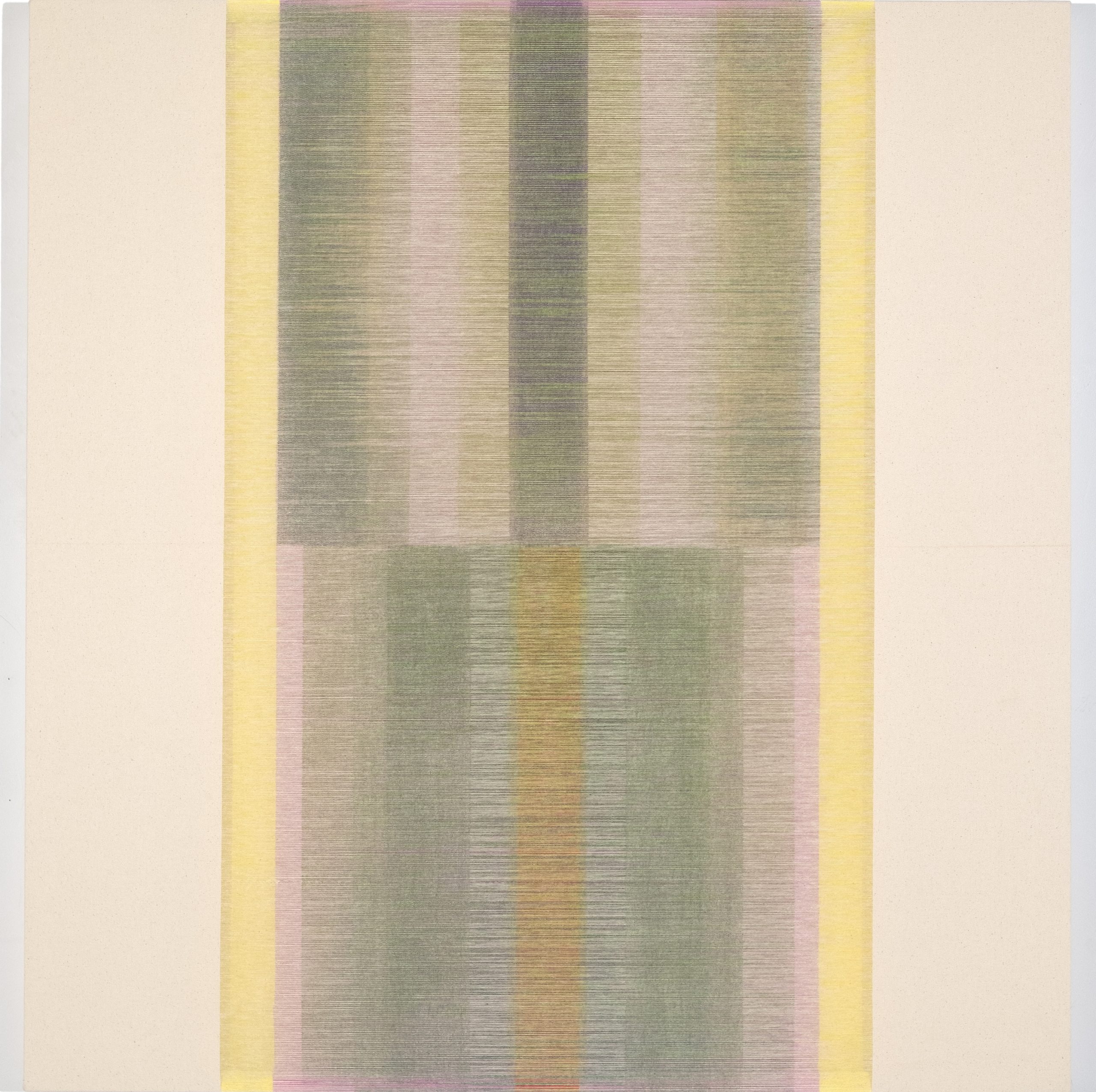
Myles Bennett
Fugitive Registers 5, 2026
Ink, Acrylic, and Colored Pencil on Canvas
43 x 41 in (109.2 x 104.1 cm) in
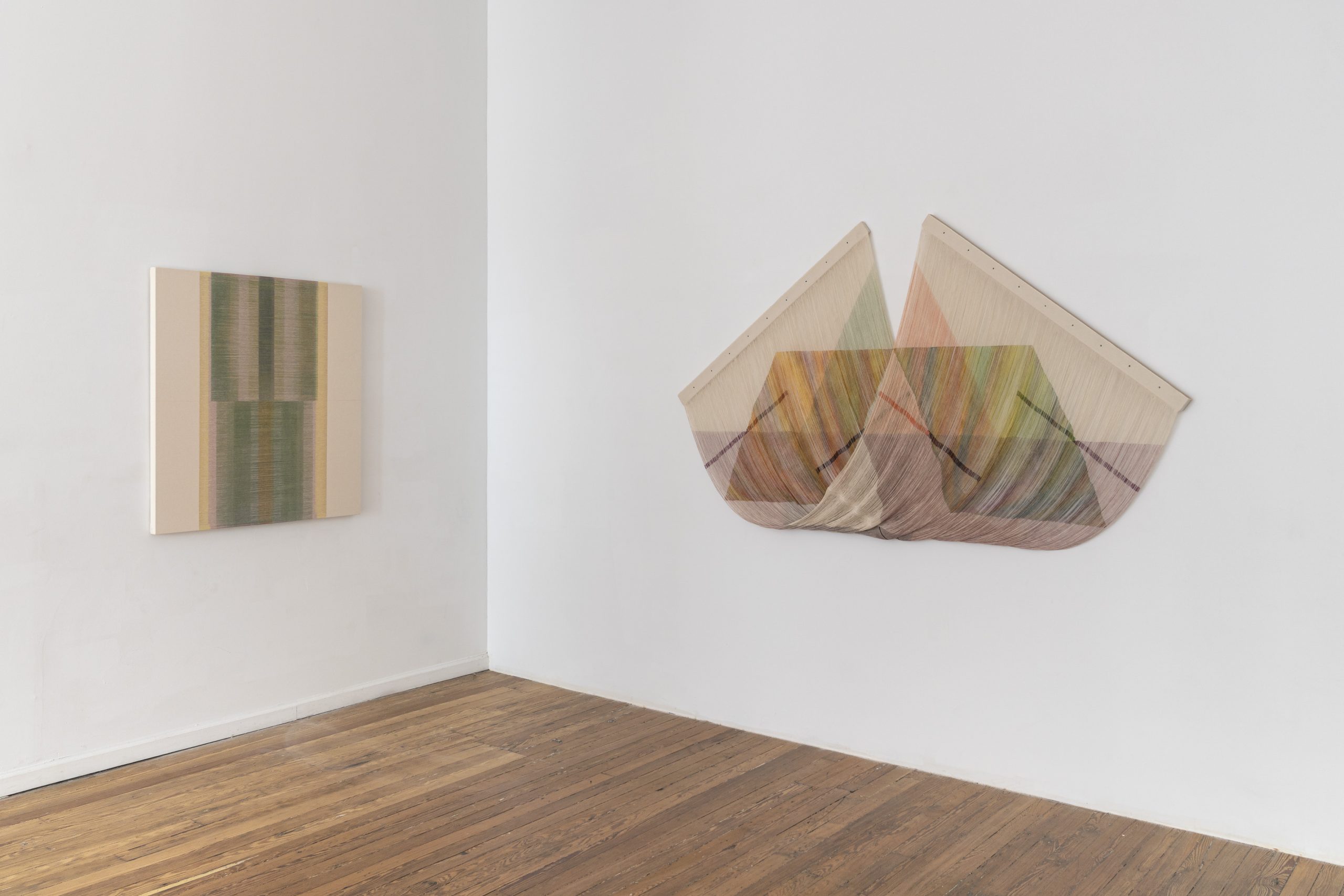
Myles Bennett, Unsubstantial Territories, Installation view, JDJ, New York, 2026
This is particularly pronounced in Manner of Hanon #19 (2026), a large, sculptural work measuring 50 x 94 inches. Here, Bennett gives equal weight to the front and back of the canvas. Traditionally, his works have distributed visual information between the painted front, a shadow program on the verso, and the rear structure. In this new work, however, the two sides become equal in force.
From the front, one painting is visible; from the side, another emerges. The two images collide optically, creating an experience that cannot be fully apprehended from a single viewpoint. The painting one cannot see becomes an active presence in the painting one can.
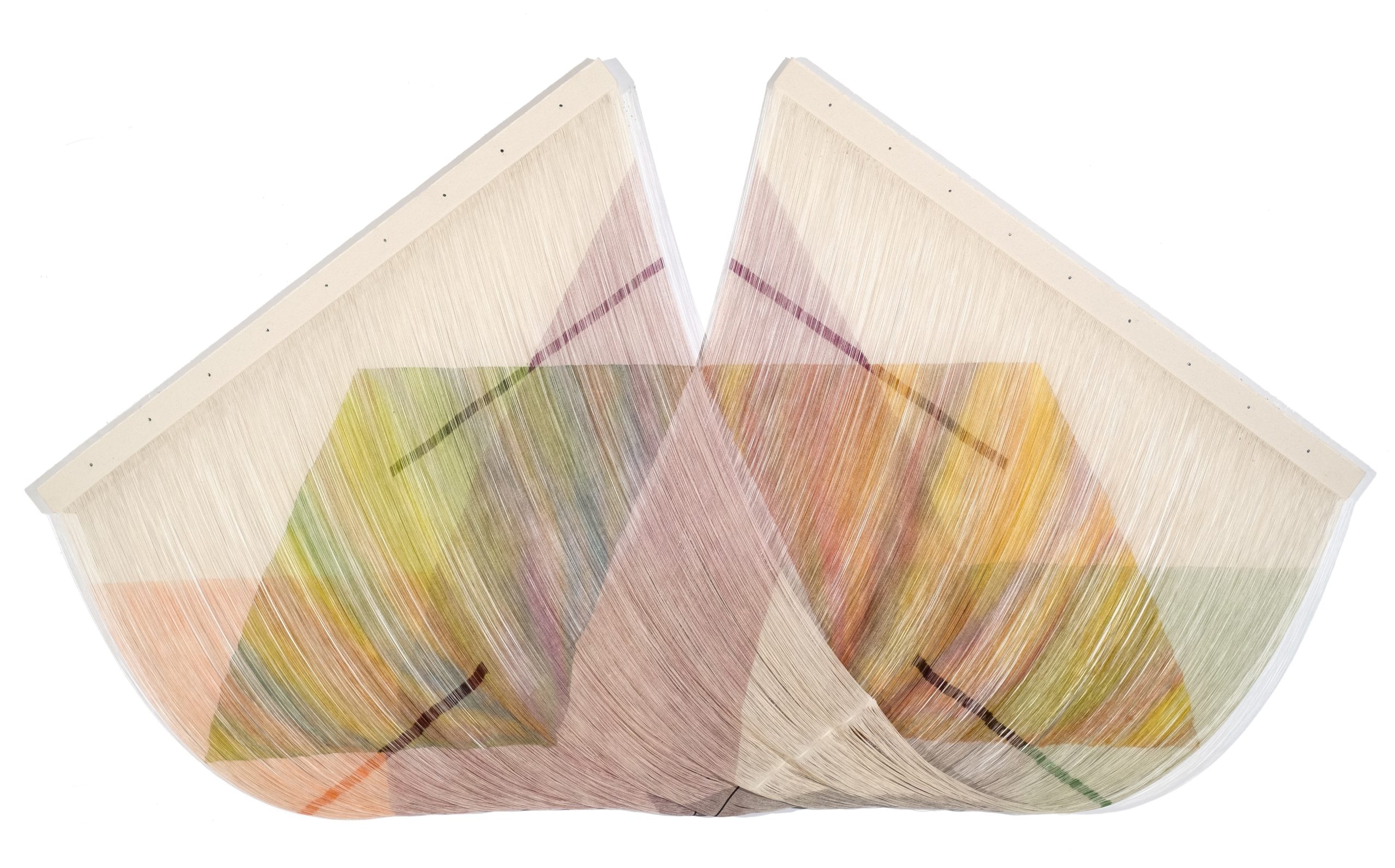
Myles Bennett
Manner of Hanon #19, 2026
Ink and Acrylic on Canvas
50 x 94 x 2 in (127 x 238.8 x 5.1 cm)
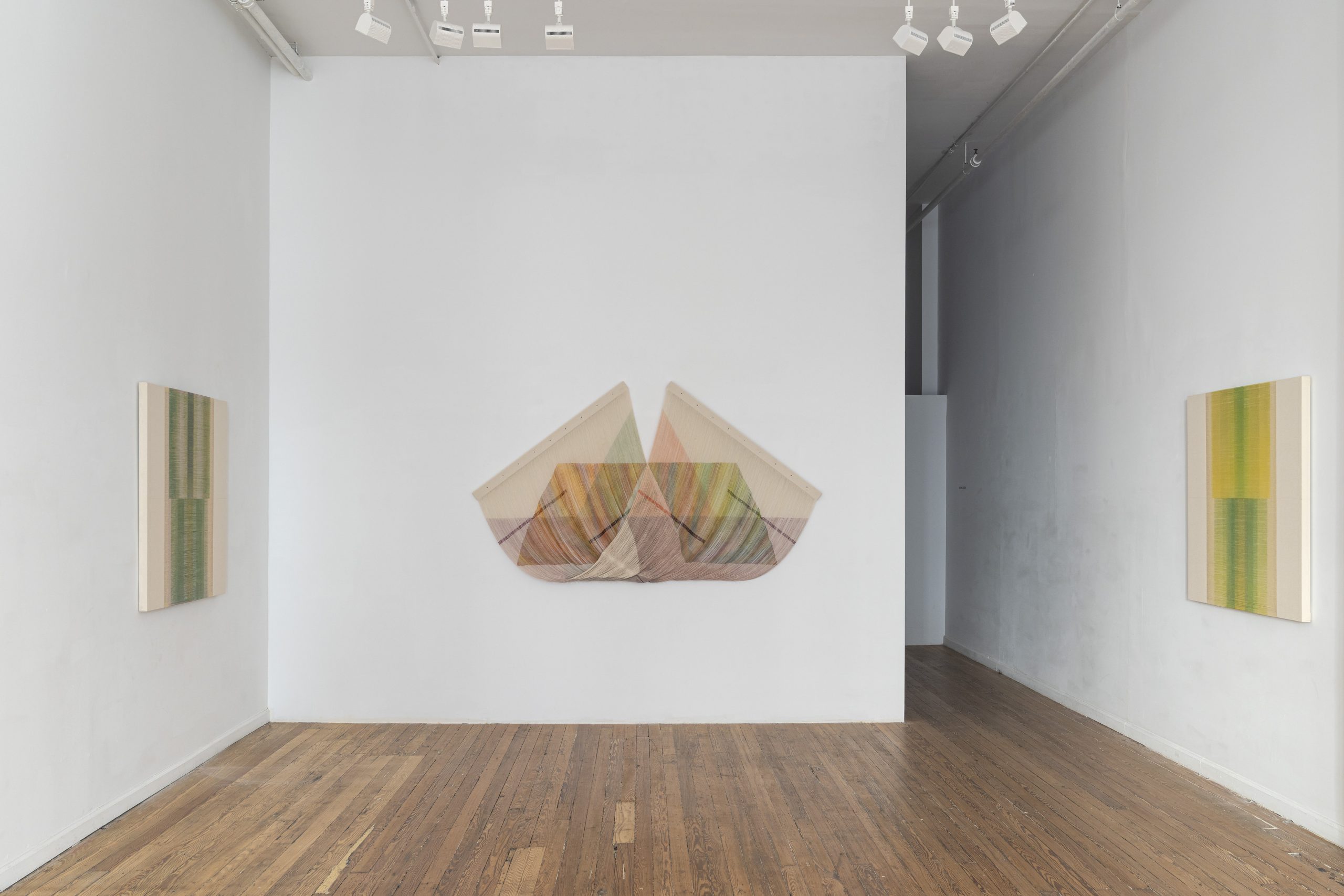
Myles Bennett, Unsubstantial Territories, Installation view, JDJ, New York, 2026
Other works extend this perceptual instability in different ways. Penumbra #14 (2026), rendered primarily in colored pencil, presents a luminous central field that appears to radiate outward into a muted atmosphere.
The Fugitive Registers paintings reduce the composition to layered vertical bands and subtle chromatic shifts, while the Tangent Waves and Cross Waves works introduce intersecting fields and translucent geometric forms. Seastorm Turner offers a more intimate counterpoint: a small work in colored pencil whose swirling, atmospheric marks evoke a landscape dissolving into abstraction.
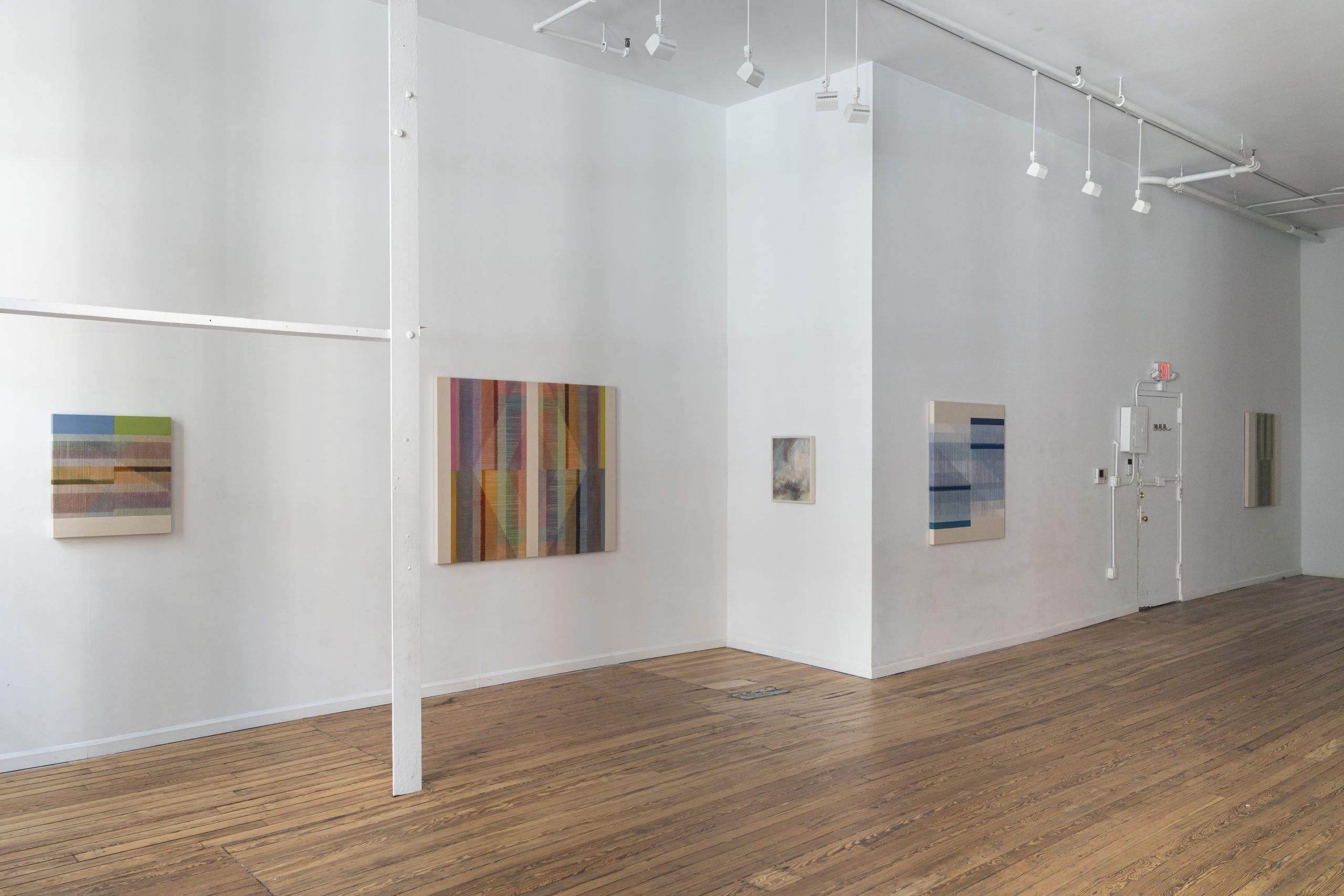
Myles Bennett, Unsubstantial Territories, Installation view, JDJ, New York, 2026
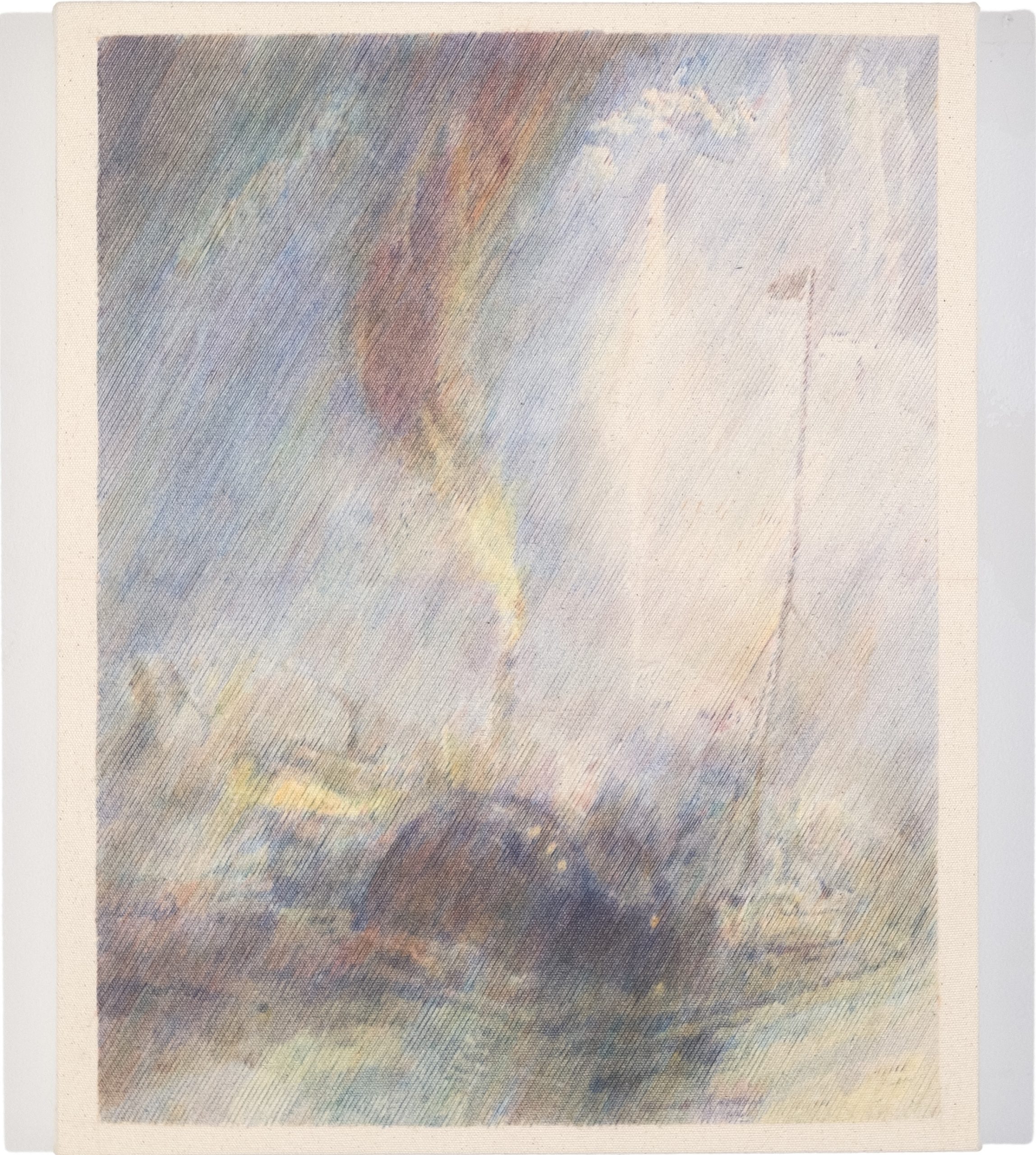
Myles Bennett
Seastorm Turner, 2026
Colored Pencil on Canvas
20 x 16 in (50.8 x 40.6 cm)
Myles Bennett, Unsubstantial Territories, Installation view, JDJ, New York, 2026
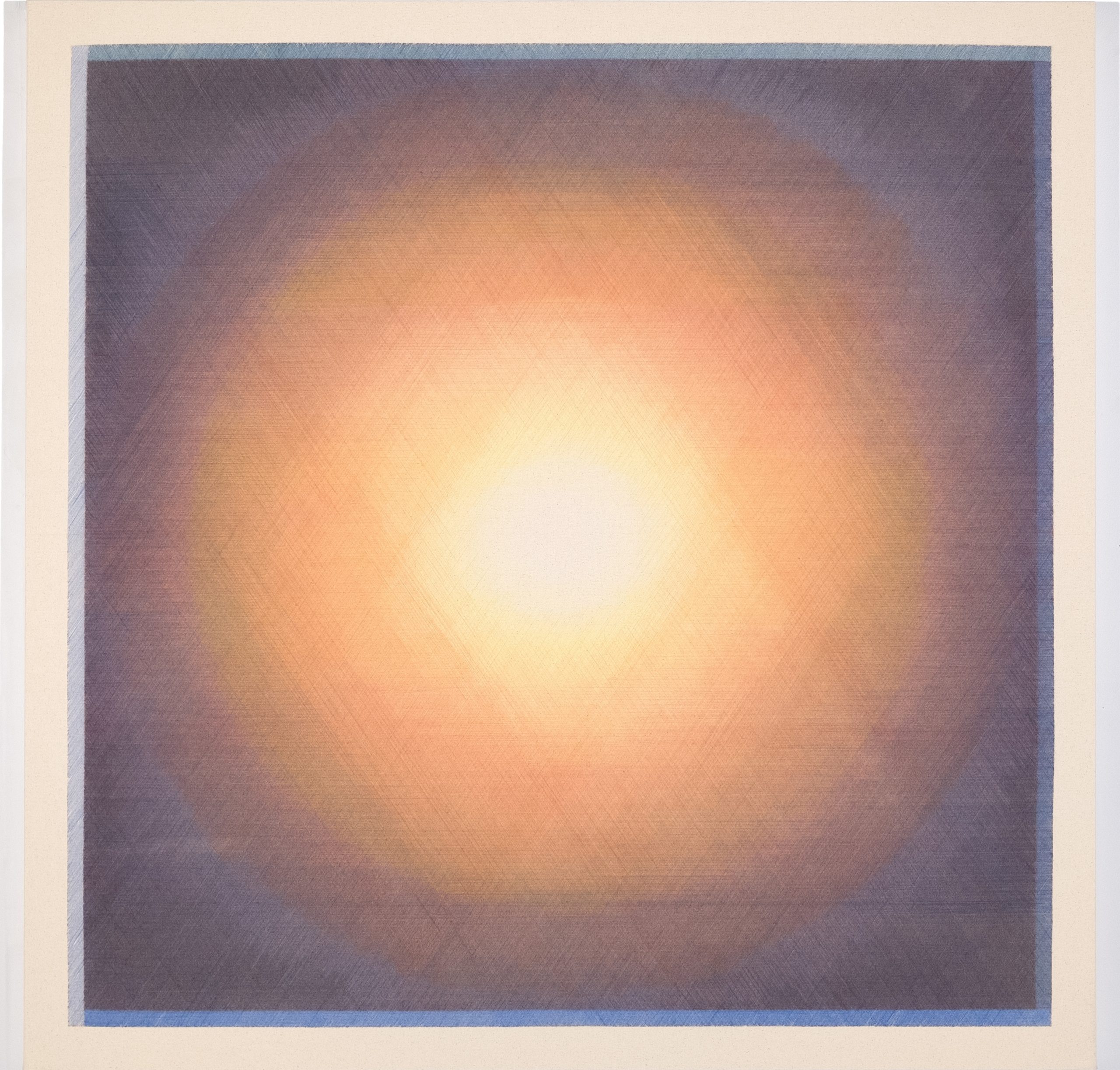
Myles Bennett
Penumbra #14, 2026
Colored Pencil on Canvas
50 x 50 in (127 x 127 cm)
Across the exhibition, Bennett increasingly limits the number of interventions within each painting,
describing his ideal as making no more than a few essential decisions. The resulting works possess a striking sense of restraint. Their apparent simplicity belies the highly developed systems that produce them, while their openness allows the viewer to become aware of small changes in color, light, depth, and position.
Myles Bennett (b. 1983, Nashville, TN; lives and works in Brooklyn, NY) received his BFA and BArch from the Rhode Island School of Design. His work has recently been exhibited in solo exhibitions at JDJ, New York; Rutger Brandt Gallery, Amsterdam, The Netherlands; Pamela Walsh Gallery, Palo Alto, CA; The Wassaic Project, Wassaic, NY; and Dimmitt Contemporary, Houston, TX. His work is included in the collections of the Tennessee State Museum of Art and the JPMorgan Chase Collection, among others.